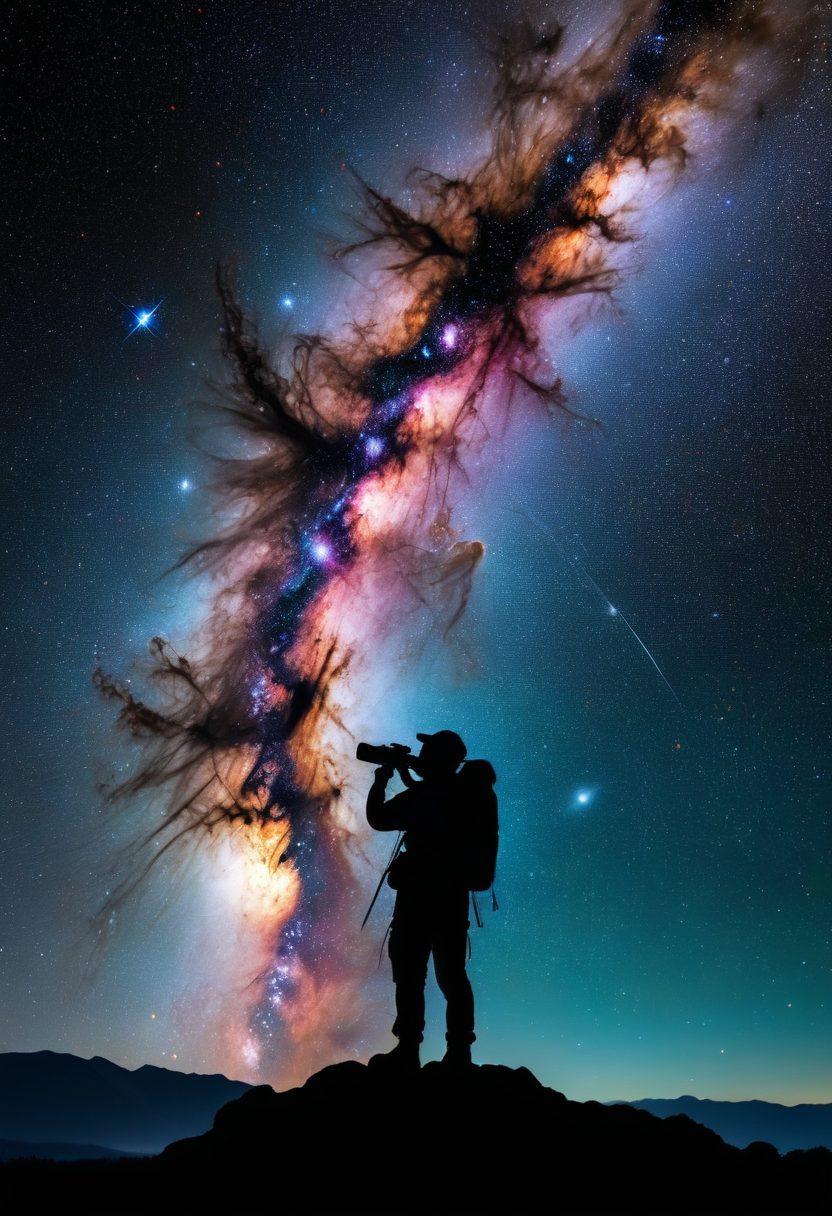
Exploring the Cosmos: Unraveling the Theories of the Universe and Beyond
Diving into the depths of astronomical wonders is like taking a plunge into a vast ocean of secrets waiting to be uncovered. Imagine gazing up at the night sky, each twinkling star a distant sun, each galaxy a world of its own, and the sheer magnificence of it all can be overwhelming. Have you ever wondered what lies beyond our Milky Way? As we embark on this journey through space exploration and cosmology, we’ll unravel the theories of the universe that spark our imagination and drive our quest for knowledge.
At the heart of astronomical research lies the question of what the universe is made of. One of the most intriguing concepts in recent science is dark matter—a cosmic mystery that composes a substantial part of the universe's mass. Although we cannot see it, we can observe its gravitational effects. Just think about that! The very fabric of our cosmos is held together by something we can’t even visualize. This leads us to ponder: what other extraordinary phenomena lurk in the shadows of our celestial realm?
Rocket science and space travel, once the domain of fiction, have become integral parts of our reality thanks to fervent minds at agencies like NASA. Our understanding of the universe expands with each mission launched into the black abyss of space. The research conducted at observatories around the globe often brings to light new theories that challenge our established beliefs. For instance, exoplanet discoveries are reshaping our cosmic perspective. What if life exists beyond our Earth? The thought sends chills down my spine—this universe is indeed full of possibilities!
As we explore these stellar theories, consider the vastness of intergalactic communication. The thought-provoking question remains: can we truly comprehend the infinity that surrounds us? Each astronomical discovery allows us to paint a more comprehensive picture of our reality. Were it not for modern advancements in telescope technology and space probes, we may never have uncovered the wonders that proliferate throughout the cosmos. It’s a testament to human ingenuity and our relentless pursuit of discovery.
In closing, the theories of the universe don't merely entertain our curiosity; they offer profound insights into the nature of existence itself. As we immerse ourselves in the mysteries of celestial phenomena, we find ourselves not just as observers, but as integral parts of this cosmic tapestry. So, whether you're a passionate astro-enthusiast or a curious wanderer gazing at the night sky, remember: the deeper you dive into these astronomical wonders, the more expansive your understanding of the universe becomes. What secrets will you uncover on your journey through the cosmos?
Navigating the Night Sky: Insights into Stellar Phenomena and Space Exploration
As dusk falls and the world retreats into the comfort of the indoors, an invitation lures us outside—the night sky. Gazing upwards, we're drawn into the magnificent tapestry of the universe, a realm filled with wondrous stellar phenomena, the glow of distant galaxies, and the ethereal beauty of celestial bodies. Have you ever wondered about the secrets hidden within that vast expanse? From the shimmering stars of the Milky Way to the enigmatic forces of dark matter, there's a cosmic story waiting to be unraveled.
Space exploration has captivated humanity since the dawn of time—what if I told you that our quest to understand space isn't just about rocket science? It's a journey through the wonders of cosmology, where scientists tirelessly research the movements of heavenly bodies. With NASA leading the charge, we are witnessing an era of unprecedented discoveries. As we peer through observatories equipped with advanced technology, astronomers are unlocking the mysteries of exoplanets, revealing the potential homes for life beyond our Earth. Isn't it thrilling to think that among those twinkling stars, there may exist planets where life as we know it could thrive?
The night sky serves as both a grand stage and a powerful reminder of our place in the universe. Each celestial object holds a unique story, from the fiery birth of stars to their explosive deaths. Such phenomena reflect the dynamic relationships within our universe, leaving us with profound questions: What is the ultimate fate of the cosmos? How did dark matter come to play a pivotal role in the structure of everything we see? If we could only find a way to jump past the boundaries of our solar system into the intergalactic void, what secrets would we uncover on this voyage of space travel?
Relatable moments spark our curiosity; a simple glance at the moon can evoke memories of childhood nights spent identifying constellations or wishfully searching for UFOs. In this fast-paced world, let’s not forget the importance of stargazing. Each visit to the night sky can remind us of our dreams and aspirations, igniting our imaginations to explore further. With every new astronomical phenomenon we witness, we gain greater insights into the universal truths that bind us all together. We’re not just observers; we are active participants in this grand cosmic adventure!
In conclusion, navigating the night sky isn’t merely an escape from daily life; it’s an exploration of our own identity in the vast universe. As we uncover the secrets of space science and engage more deeply with the mysteries of the cosmos, we ignite a passion for discovery that surpasses conventional boundaries. The universe awaits—are you ready to embark on a journey of discovery and adventure? Whether you’re an aspiring astronaut, a budding astrophysicist, or simply a curious spirit, the night sky holds limitless possibilities for those willing to explore.
From Dark Matter to Exoplanets: Breaking Down Cosmic Mysteries in Modern Research
Have you ever looked up at the night sky and wondered about the mysteries that lie beyond our atmosphere? The universe is a vast ocean of stellar wonders, shimmering with secrets waiting to be uncovered. From the galaxies swirling in the Milky Way to the black voids of dark matter, modern research in cosmology is on a quest to decode the complex phenomena that shape our celestial existence. In this blog, we will embark on a thrilling journey through the cosmos, exploring topics like space exploration, exoplanets, and the enigmatic nature of dark matter. Dive in as we unravel the universal truths of our intergalactic home!
NASA has long been at the forefront of space science, pushing the boundaries of what is known and what is yet to be discovered. Did you know that advancements in rocket science have allowed us to study exoplanets—worlds that exist outside our solar system? With the help of observatories and space telescopes, researchers have identified thousands of these celestial bodies. Imagine a planet that might host alien life or reveal new forms of atmospheric phenomena. The thought alone sends tingles down the spine! What would it be like to gaze at a planet orbiting a distant star, billions of light-years away?
But what about the dark matter that makes up most of the universe's mass yet remains invisible to our eyes? It’s like the ghost of matter—pervasive but elusive. Dark matter does not emit light or energy, making it too difficult to detect with traditional telescopes. Instead, scientists rely on its gravitational effects on visible matter. Picture this: holding a tiny flashlight in a dimly lit room; you can only see what the light touches, yet you know there's more in the shadows. This analogy describes dark matter perfectly—gravitationally shaping galaxies while remaining obscured from view. How do you think these theories of the universe might change our understanding of reality?
Research on cosmic phenomena goes beyond just the scientific; it touches upon philosophy and our existence. As we learn more about the infinite expanse of space, we also come to reflect upon our place within it. Space exploration opens doors to questions that challenge our perceptions. For instance, if we can find exoplanets that could harbor life, what can we learn about our own existence on Earth? The quest for understanding how life thrives on these distant worlds could provide answers to what it mean being human in an intergalactic context. Will we one day be able to connect with our celestial neighbors?
As we continue this journey of discovery in the vast expanse of the cosmos, it becomes clear that the universe holds more mysteries than we can grasp. From the theories of dark matter to the discovery of new exoplanets, the ongoing research in space science not only quenches our thirst for knowledge but also fuels our imagination. Each tiny speck of stardust you see in the night sky may just be the beginning of another adventure—a story waiting to unfold. So, next time you find yourself gazing up at the stars, remember that you are a part of something much bigger, and who knows? Those twinkling lights might just be calling out for you to join in the journey of space travel and exploration!